
FFPE cell pellets · IHC controls
Cell pellet blocks
FFPE cell pellets from characterized cell lines, for IHC run controls and antibody validation. We also make FFPE blocks and low-density cell TMAs from your own transfected, knockout, or knockdown cells.
Marker tags: + positive · − negative · low
 Cell block
Jurkat
Hematolymphoid
- CD3 +
- CD45 +
Human T-lymphoblast line from the peripheral blood of a child with acute T-cell leukemia.
IHC use: Positive control for T-cell markers, including CD3 and CD45, on hematolymphoid IHC panels.
 Cell pellet
H1975
Lung
- Cytokeratin +
- EGFR +
Human lung adenocarcinoma (NCI-H1975). The line carries EGFR L858R and T790M.
IHC use: Lung carcinoma control for cytokeratin and EGFR IHC, including panels that need an EGFR-mutant adenocarcinoma reference.
 Cell pellet
A549
Lung
- Cytokeratin +
- TTF-1 low
Human lung carcinoma with alveolar epithelial features, established from a 58-year-old man.
IHC use: Epithelial cytokeratin control. Often paired with TTF-1–positive lung lines as a TTF-1–low reference.
 Cell pellet
OVCAR-3
Ovary
- Cytokeratin +
- PAX8 +
- CA125 +
Human ovarian adenocarcinoma, established from the ascites of a patient with progressive disease.
IHC use: Ovarian carcinoma control for cytokeratin, PAX8, and CA125 (MUC16).
 Cell block
PC-3
Prostate
- PSA −
- AR low
Human prostate adenocarcinoma from a bone metastasis. Androgen-independent.
IHC use: Prostate carcinoma control. Typically PSA-negative and androgen-receptor low, so it is the negative reference beside LNCaP on prostate marker panels.
 Cell pellet
DU145
Prostate
- AR −
- PSA −
Human prostate carcinoma from a brain metastasis. Androgen-independent.
IHC use: Prostate epithelial control used as an androgen-receptor–negative and PSA-negative reference.
 Cell block
HCT116
Colorectal
- Cytokeratin +
- CDX2 +
- MLH1 −
Human colorectal carcinoma. Microsatellite-unstable and MLH1-deficient.
IHC use: Colorectal control for cytokeratin and CDX2. Standard negative control for MLH1 on mismatch-repair IHC.
 Cell pellet
A498
Kidney
- Cytokeratin +
- PAX8 +
Human renal cell carcinoma (A-498, ATCC HTB-44).
IHC use: Kidney carcinoma control for cytokeratin and PAX8.
 Cell block
HUVEC
Endothelial
- CD31 +
- ERG +
- vWF +
Primary human umbilical vein endothelial cells. This is an endothelial preparation, not a tumor line.
IHC use: Positive control for endothelial markers CD31, ERG, and von Willebrand factor.
 Cell pellet
MCF-7
Breast
- ER +
- PR +
- HER2 −
Human breast adenocarcinoma from a pleural effusion. Estrogen-receptor positive, progesterone-receptor positive, HER2-negative.
IHC use: Positive control for estrogen receptor and progesterone receptor. HER2-negative reference beside SKBR3.
 Cell pellet
SKBR3
Breast
- HER2 +
- ER −
Human breast adenocarcinoma from a pleural effusion. HER2-amplified and estrogen-receptor negative.
IHC use: HER2 strong-positive control for breast IHC. Estrogen-receptor negative reference beside MCF-7 and T47D.
 Cell block
22RV1
Prostate
- AR +
Human prostate carcinoma (22Rv1), derived from the CWR22 relapsed xenograft. Androgen-responsive and androgen-receptor positive.
IHC use: Androgen-receptor positive prostate control, including IHC aimed at AR and AR splice variants.
 Cell block
LNCAP
Prostate
- PSA +
- PSMA +
- AR +
Human prostate carcinoma (LNCaP) from a lymph-node metastasis. Androgen-sensitive.
IHC use: Positive control for PSA, PSMA, and androgen receptor on prostate IHC panels.
 Cell block
C42B
Prostate
- AR +
Bone-metastatic, castration-resistant subline of LNCaP (C4-2B).
IHC use: Prostate control paired with LNCaP when the IHC question is androgen-receptor signaling after castration resistance.
 Cell pellet
colo205
Colorectal
- Cytokeratin +
- CDX2 +
- CEA +
Human colorectal adenocarcinoma (COLO 205), established from ascites.
IHC use: Colorectal epithelial control for cytokeratin, CDX2, and CEA.
 Cell block
MDA-MB-453
Breast
- ER −
- PR −
- AR +
Human breast carcinoma from a pericardial effusion. Estrogen- and progesterone-receptor negative, androgen-receptor positive.
IHC use: Breast carcinoma control for androgen receptor and HER2 IHC, distinct from the ER-positive MCF-7 and T47D lines.
 Cell pellet
A431
Skin / squamous
- EGFR +
- Cytokeratin +
Human epidermoid carcinoma of the vulva. The line expresses EGFR at a very high level.
IHC use: Strong positive control for EGFR and cytokeratin, and a squamous epithelial reference.
 Cell block
T47D
Breast
- ER +
- PR +
Human breast ductal carcinoma from a pleural effusion. Estrogen-receptor positive and progesterone-receptor positive.
IHC use: Positive control for estrogen receptor and progesterone receptor, used with MCF-7 on breast hormone-receptor IHC.
 Cell block
293T
Embryonic kidney
- SV40 T antigen +
Human embryonic kidney cells (HEK 293T), a derivative of HEK 293 that stably expresses SV40 large T antigen. Widely used as a transfection host.
IHC use: Overexpression control: blocks from 293T cells transfected with your target give a positive control, and untransfected cells a matched negative. Confirm baseline expression of your marker before using untransfected cells as the negative.
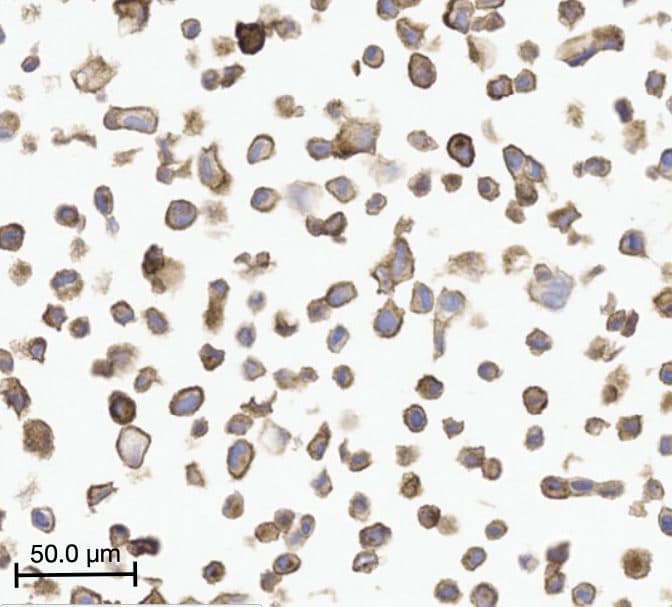
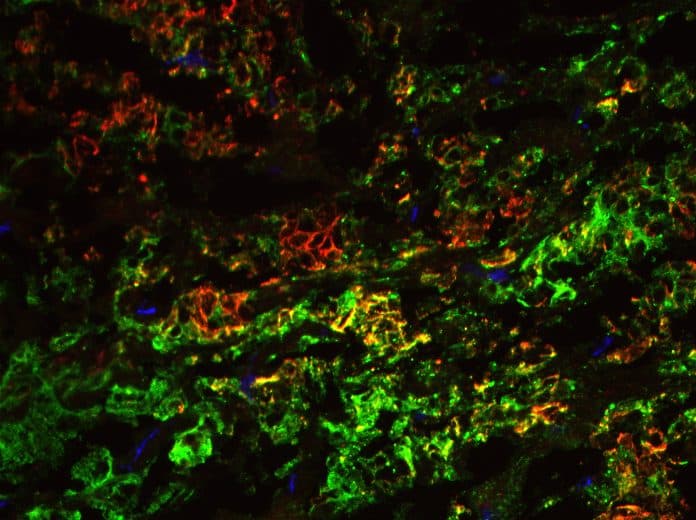
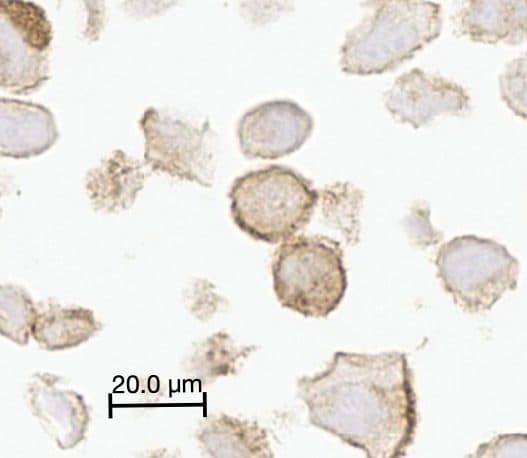
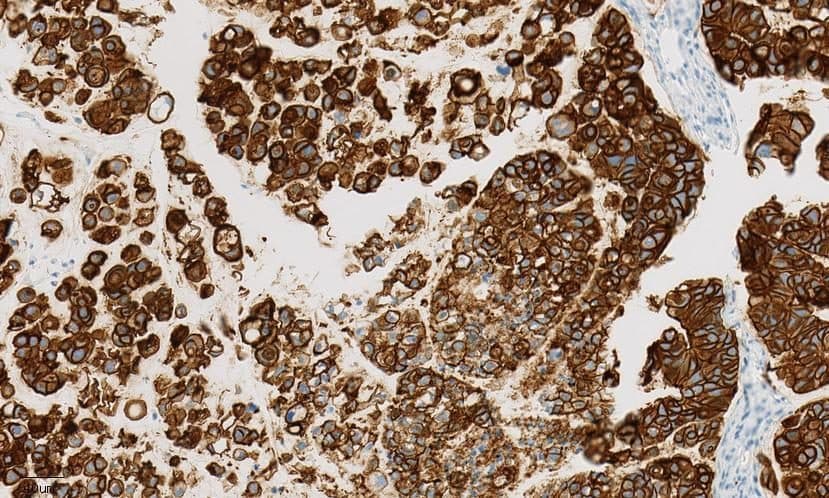
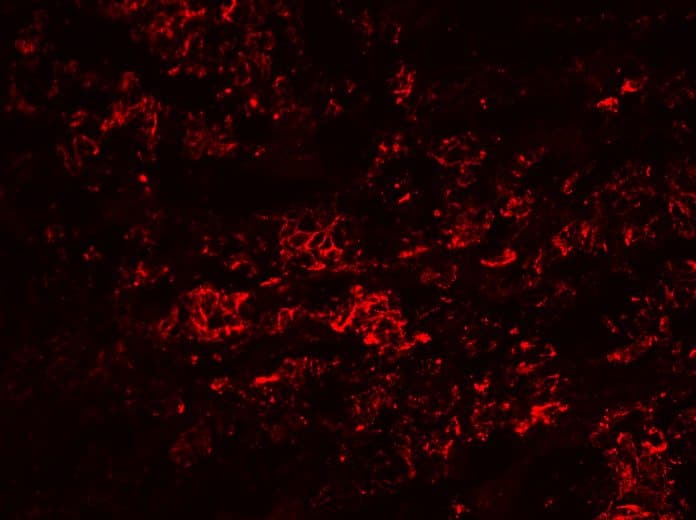
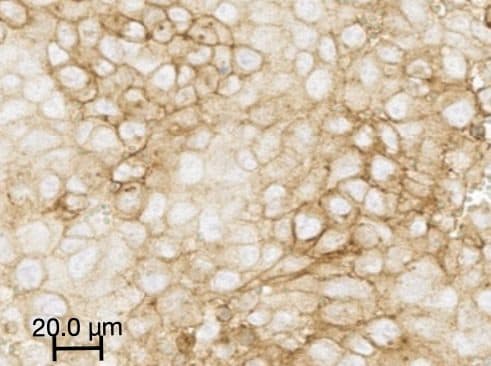
Marker profiles reflect the published identity of each line and how it is used as an IHC control. Thumbnails labelled “Cell pellet” are examples of our cell pellet IHC; “Cell block example” thumbnails are illustrative. Not every thumbnail is a stain of that specific cell line.
Custom cell blocks
Send us your cells. We'll make the FFPE blocks.
Turn your own cell lines into FFPE controls for antibody validation and IHC assay development, including lines with your own custom markers.
Transfected lines
Overexpression of your own target or custom marker, as a positive control.
Knockout lines
CRISPR or other knockouts, as a true negative control for antibody specificity.
Knockdown lines
siRNA or shRNA knockdowns to show reduced staining against the parent line.
Isogenic pairs
Parent and modified lines blocked side by side for a matched positive and negative.
Treated cells
Drug-treated, stimulated, or time-course samples for pharmacodynamic IHC.
Primary and other cells
Primary, patient-derived, or any other cells you need in FFPE.
Formats
Cell pellet blocks
One FFPE block per cell line or condition.
Low-density cell TMA
Several cell lines or conditions on one block, so positive and negative controls stain on the same slide in every IHC run.
How it works
- 1
Tell us about your cells
Cell lines, modifications, targets, and the format you need.
- 2
Ship your cells
We confirm cell numbers and send shipping instructions.
- 3
We make the FFPE blocks
Your cells are fixed, pelleted, and paraffin-embedded as blocks or a cell TMA.
- 4
Receive blocks or slides
Get the blocks back, or add sections, H&E, or IHC on our side.
Need a catalog line we don't list? Use the same form.